The AI solutions developed by STACC are built on continuous research and development. As a positively evaluated research institution, we combine scientific rigor with practical applications to create reliable solutions for even the most demanding projects.
STACC was born from a shared vision between the Institute of Computer Science at the University of Tartu and the private sector, supported by Estonia’s Competence Centres programme. Our close collaboration with academia continues to this day.
STACC’s research and development work focuses on bringing the latest AI technologies into real-world use – reliably, responsibly, and at scale.
Our research areas:
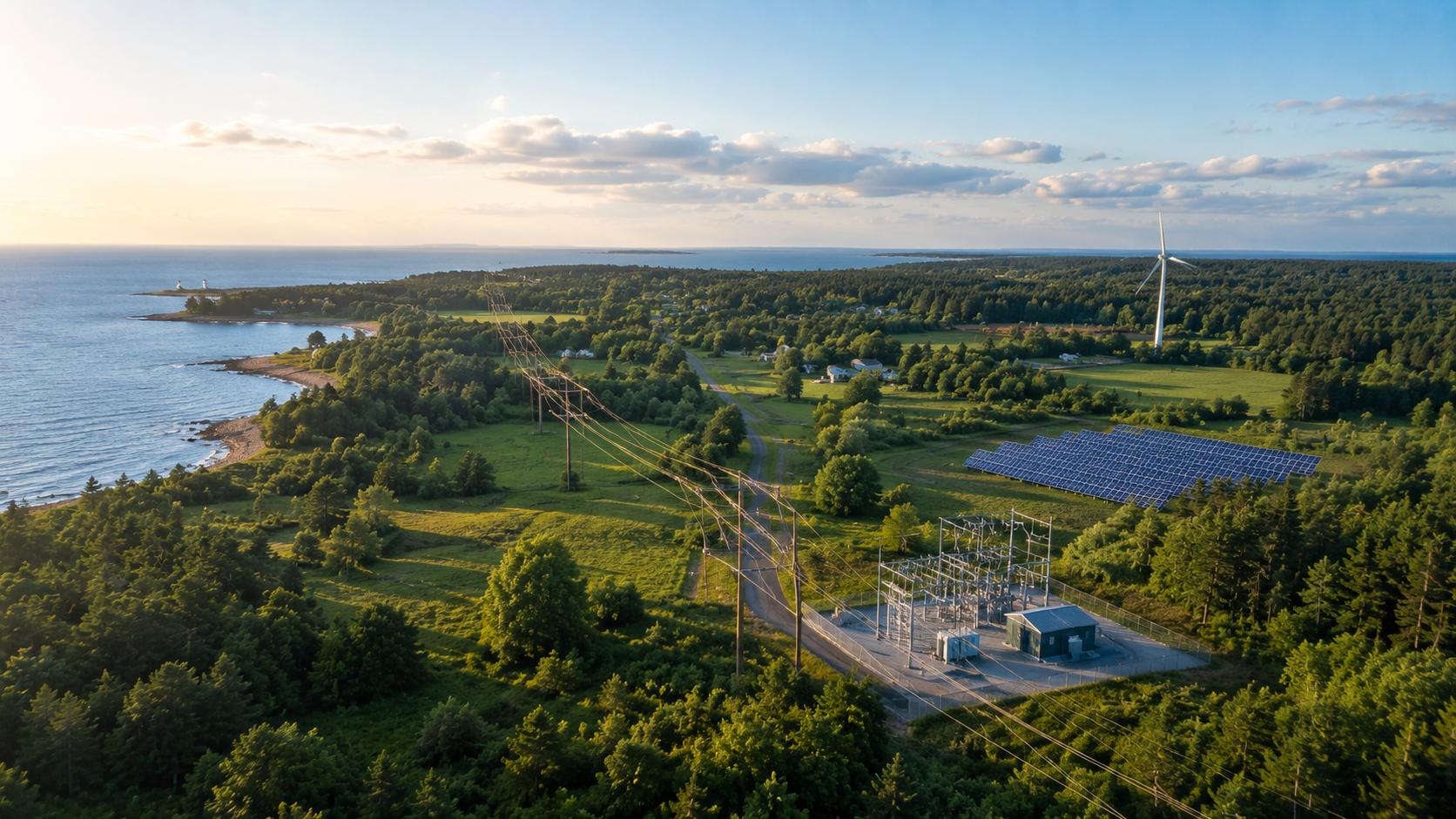
Artificial intelligence in energy and the green transition
Secondary use of health data and health data analytics
Business process automation with generative AI
STACC as a research institution
develops new AI methods and technologies for data-rich environments,
bridges the gap between academia and industry, helping companies bring advanced technologies to market,
strengthens the international competitiveness of Estonian companies by providing a testing environment for prototyping and adapting new technologies,
supports the development of Estonia’s AI-powered digital state,
trains highly qualified specialists through an in-house internship programme and collaboration with the University of Tartu, contributing to teaching and supervising student research,
promotes knowledge sharing by providing AI expertise through training, public speaking, and outreach activities.
Positively Evaluated Research and Development Institution
STACC is a positively evaluated research and development institution in the field of data science and analytics. As part of the evaluation process, independent experts assess the quality of research and development activities, their outcomes, and the organisation’s capacity to sustain them over time.
For our partners and clients, this provides assurance that our work is based on scientifically sound methodologies, proper validation, and well-documented processes. This is particularly important in projects with high requirements for reliability, transparency, data protection, and quality.
STACC is also a qualified service provider under the Enterprise Estonia’s (EIS) Innovation Grant, Development Grant, and Programme for Applied Research schemes.
Our research and development activities are led by experts who combine strong academic backgrounds with practical experience in artificial intelligence, data science, health informatics, and energy.
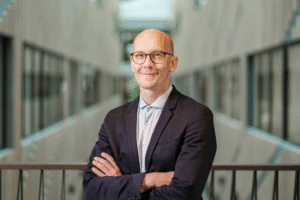
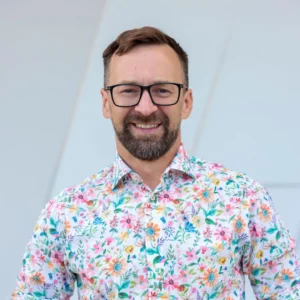
Kalev has extensive experience leading innovation projects and AI teams in the field of artificial intelligence. He has served as CEO of STACC since 2019 (and previously in 2013–2016) and was a co-founder of the remote sensing company KappaZeta between 2016 and 2019.
He studied history, human geography, and geoinformatics at the Universities of Tartu, Uppsala, and Lund. In his PhD thesis, which he defended at the University of Tartu in 2025, he researched the use of synthetic aperture radar data for agricultural and urban remote sensing.
Kalev also contributes as an expert to several innovation and research bodies, including Metrosert’s Health Data Council and the Estonian Research Council’s Research Infrastructure Committee. He has also served as an evaluator for research and innovation projects under the European Commission’s Horizon 2020 programme.
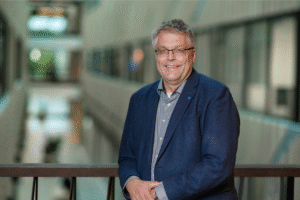
Jaak is Professor of Bioinformatics at the University of Tartu, Head of the Institute of Computer Science, and Vice President of the Estonian Academy of Sciences. He is also a member of Academia Europaea and has led STACC’s research direction since its inception.
His work focuses on data science, bioinformatics, health data analytics, and the application of artificial intelligence. In addition to his research, he has led numerous international projects and contributed to the development of health data and bioinformatics in Estonia.
Jaak was one of the initiators behind the creation of STACC. Under his leadership, STACC was established as an applied research centre through a collaboration between Estonian IT companies and the University of Tartu, with the goal of helping companies apply cutting-edge research to practical challenges.
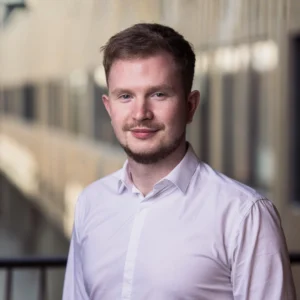
Dmytro is an AI and biomedical computer vision expert whose work focuses on developing practical machine learning methods for medical imaging, cancer diagnostics, and real-world AI applications. His research connects advanced deep learning with clinically relevant problems, particularly in the analysis of CT images and the development of trustworthy AI tools for healthcare.
He is an Associate Professor of AI at the University of Tartu and founder and head of the Biomedical Computer Vision Lab. In Estonia, he has contributed to the development of medical AI expertise through research, teaching, supervision, and collaboration with hospitals and technology companies. His work has been recognised with Estonia’s Young IT Scientist of the Year award.
Dmytro teaches machine learning and computer vision, has supervised numerous student projects and theses, and actively supports the translation of Estonian AI research into practical clinical and industrial applications.
Sulev is a health data expert with extensive experience across the entire lifecycle of health data – from data collection and management to advanced analytics and international research collaboration in health informatics and personalised medicine.
He has played a key role in the development of the Estonian Biobank and national health registry information systems and has led the development of Estonia’s personalised medicine infrastructure. His current focus is on data science in health informatics, including the creation of some of Estonia’s largest scientific health datasets.
At the University of Tartu, he has supervised dozens of theses and continues to supervise doctoral students. Sulev is the lead of OHDSI Estonia and serves on the boards of both the Estonian Society of Personalised Medicine and the Estonian Health Informatics Association.
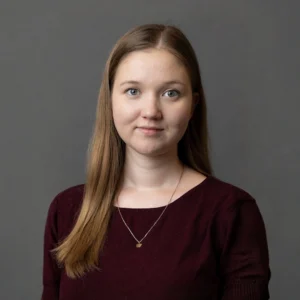
Carmen’s work focuses on developing computational methods for analysing large-scale datasets. Her experience spans genomic data analysis as well as the wind energy sector.
She earned both her Master’s and PhD degrees in Bioinformatics from Aarhus University. Her doctoral research, completed in 2025, focused on developing novel computational methods for analysing whole-genome sequencing data. Following her PhD, she worked as a postdoctoral researcher in the Computational Genomics Group at Aarhus University’s Department of Molecular Medicine.
Previously, Carmen worked as an analyst at the Danish company Claviate, focusing on process optimisation in the wind energy sector. She has authored and co-authored multiple scientific publications and supervised Bachelor’s and Master’s theses.
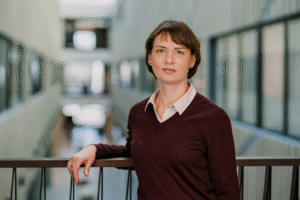
Before joining STACC, Jane spent more than 20 years working in technology transfer at the University of Tartu, supporting intellectual property protection and the commercialisation of research results. This experience provided her with a strong foundation for fostering collaboration between researchers and businesses, including negotiating agreements, overseeing their implementation, and maintaining long-term partnerships.
At STACC, Jane helps bring research-based solutions into practical use by supporting the preparation of research and development projects and collaboration between companies and research partners.
She also serves as an intellectual property expert on Estonia’s Research and Development and Innovation Policy Council (TAIP). Jane holds a degree in Business Administration from the University of Tartu and has also studied law.
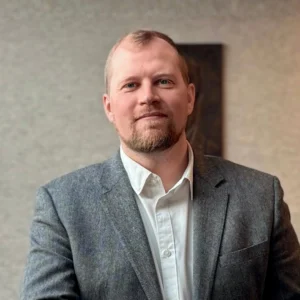
Siim has worked in the energy sector since 2012 across both the public and private sectors. His work focuses on energy efficiency, technologies supporting the green transition, and the development of data-driven energy solutions.
Previously, he founded Tepsli OÜ, a consultancy specialising in BREEAM and LEED certification as well as energy-related advisory services. He has also managed several European Union projects from proposal preparation through implementation, including projects under Horizon 2020 and the Connecting Europe Facility (CEF).
Siim earned his Master’s degree in Environmental and Resource Management from the University of Southern Denmark and combines hands-on industry experience with a research-based approach to energy innovation.
Research Collaborations
Collaboration with universities and international research partners helps us maintain world-class expertise and bring the latest innovations into real-world projects.
Estonian partners We collaborate with Estonia’s leading research and innovation organisations to develop new AI technologies and bring research-based solutions into practical use.
International collaborations International research collaboration helps us stay at the forefront of our field and participate in projects whose impact extends beyond Estonia.
Stories from Research at STACC
Read more about our research projects, collaborations, and the people behind them – from scientific discoveries to practical applications.
This website uses cookies to improve your experience while you navigate through the website. Out of these, the cookies that are categorized as necessary are stored on your browser as they are essential for the working of basic functionalities of the website. We also use third-party cookies that help us analyze and understand how you use this website. These cookies will be stored in your browser only with your consent. You also have the option to opt-out of these cookies. But opting out of some of these cookies may affect your browsing experience.