STACC’s story did not begin with the AI boom. It started much earlier, when problems involving data were already very real, but the people, companies, scientific expertise and computing power needed to tackle them had yet to be brought together.
On 13 July 2009, the founders went to a notary to set up STACC OÜ. But there is more to STACC’s beginnings than a single date. Before that came discussions, doubts, the search for funding, getting companies around the same table and some very practical questions – such as how to work with a dataset that would have taken days, if not weeks, to transfer over a network.
Jaak Vilo, one of the people behind the original idea for STACC and one of its founders, tells the story of how the company came about. Jaak is Professor of Bioinformatics and Head of the Institute of Computer Science at the University of Tartu. For years, his work has involved data-driven research, computer science and working with companies to put research into practice.
The interview was conducted and edited by Annet Muru, who has previously worked at both STACC and the University of Tartu’s Institute of Computer Science.
Thinking back to the years before STACC was founded, what was happening at the time that gave rise to the idea?
It was around 2006 or 2007 when I realised that Estonia’s needs and what we were actually doing in IT education and research were out of step.
A considerable number of companies had emerged in Estonia, contributing to economic growth and needing skilled people. But the education and research system couldn’t adapt quickly enough to a situation where one field was growing so rapidly.
There weren’t many opportunities at the time. IT accounted for a very small share of the national research grant system. There were also a few special funding schemes, such as centres of excellence and technology competence centres (known by the Estonian abbreviation TAK). I wasn’t involved in the first call for competence centre proposals, but telecommunications companies and Cybernetica, among others, had applied with plans to develop Estonian-language technologies, security solutions and similar things. Those applications weren’t successful.
When a new call for competence centre proposals was announced in 2008, with at least a small chance of securing funding for new research areas, Marlon Dumas and I started discussing how to involve Estonian companies and which topics we should focus on.
There was a clear need for software development, data science (including recommendation systems) and cybersecurity. We also added health data analytics because my experience with the Estonian Biobank had shown me that researchers could work with genomic data, but health data was fragmented. It was difficult even to get hold of, let alone analyse.
The late Monika Oit, who was then head of Cybernetica, was sceptical about whether Estonia’s IT sector stood a chance of being selected for funding in the country’s research landscape. But we didn’t give up. We put a lot of effort into bringing major companies to the table, including Skype, Swedbank, Nortal, Cybernetica, Delfi, Regio, CGI and others.
Their needs and expectations were probably quite different. But thanks to Marlon’s and my academic track records, and the work we put in, we managed to secure a grant for the sector. That funding has helped companies work through a great many challenges. I think it also helped our credibility that the interest wasn’t coming only from IT development companies, but from organisations such as Swedbank, Delfi and Skype.
In terms of ownership, the University of Tartu and Tallinn University of Technology each held a 2% stake. The larger stakes were held by companies: Webmedia, Cybernetica and Regio each held 24%, while Quretec and Logica held 12% each.
What was the original ambition? What was STACC meant to achieve or change?
Our vision, essentially, was to make Estonia’s IT sector more research-intensive.
We wanted a new generation of technology developers who could turn knowledge from fundamental research into practical applications. We also wanted to see more companies interested in developing new technologies.
In terms of economic impact, STACC had some of Estonia’s largest companies involved. That clearly set us apart from other competence centres, many of which struggled to find even smaller businesses willing to get involved and commit co-funding.
One thing that made STACC different was that we wanted companies to take responsibility. That’s why we kept the universities’ formal ownership stakes as small as possible. At the same time, the connection with the university was very important, as it allowed us to introduce master’s and doctoral students to research – not just through theory, but by involving them in practical research topics.
Who were the people and partners without whom STACC would never have got off the ground?
I’d say the core group around which we could build the main research programme consisted of Skype, Swedbank, Delfi, Regio and Cybernetica. We also understood that we needed to start working on solutions and data analysis in healthcare, even though commercial demand was still low at the time.
Nortal wasn’t entirely sure at first where the benefits would come from. In practice, the benefit came from placing the ZeroTurnaround team within STACC, along with a financial boost. ZeroTurnaround is clearly one of STACC’s biggest success stories – at one point, the company became more valuable than its parent company.
Marlon Dumas, then Professor of Software Engineering at the University of Tartu, also played an enormously important role. In the beginning, as university employees, we needed to bring companies closer to research. Many of them simply didn’t have the knowledge, the need or the culture for that kind of collaboration. Marlon had an extraordinary ability to convince people. I couldn’t possibly have done it on my own. His role was fundamental.
How much were you talking about data science and AI back then, in the sense that we understand those fields today?
Data was a major part of what we were doing from the very beginning. There was Skype’s social network analysis, health data, Delfi’s recommendation engines, Regio’s data analytics capabilities, business processes and information security. And of course, there was plenty of software development as well. The main thing was getting the companies around the table.
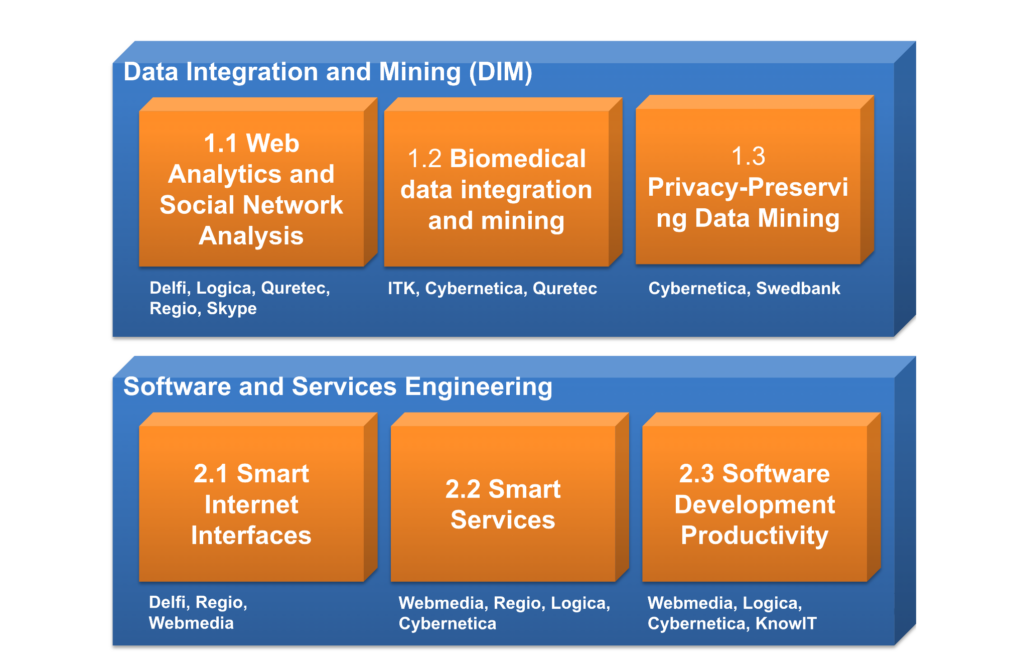
Looking at the original funding application, there were two research tracks.
The first was Data Integration and Mining (DIM), covering web analytics and social network analysis, biomedical data integration and mining, and privacy-preserving data mining.
The second was Software and Services Engineering, covering smart internet interfaces, smart services and software development productivity.
Data played an important role in all of them.
Looking at STACC’s early projects, which one best illustrates what the centre was originally set up to do?
I think it would have to be the analysis of Skype’s social network. Nobody had done anything quite like it on that scale at the time.
With more than 400 million registered users, Skype had the world’s largest social network at that point. We carried out some really interesting analyses that simply wouldn’t have been possible otherwise. A couple of new algorithms were even patented – for example, one was about quickly working out how close or distant someone with the first name Mary was within the network.
Skype’s search function was unbelievably bad back then. If you searched for Mary, the first results would be completely random people called Mary from different parts of the world. Surely it would make more sense to suggest people who were closer to your own network of contacts.
Health data was another major area. Everyone believes there’s enormous value in it, but actually finding that value is another matter. And, of course, with health data, questions about the sensitivity of the information often arise long before you get anywhere near realising its value.
That already sounds quite like modern-day data science, but the technology must have been very different back then. How did you actually work with datasets of that size?
Around the same time, in 2009, we managed to set up the High Performance Computing (HPC) Centre at the University of Tartu.
That first server cluster of 42 computers, named Aurumasin (‘Steam Engine’), included some of our first relatively large computers, such as the Institute of Computer Science’s 32-core server with 256 GB of memory. Having those resources was probably also what made us think we could start tackling somewhat larger computations.
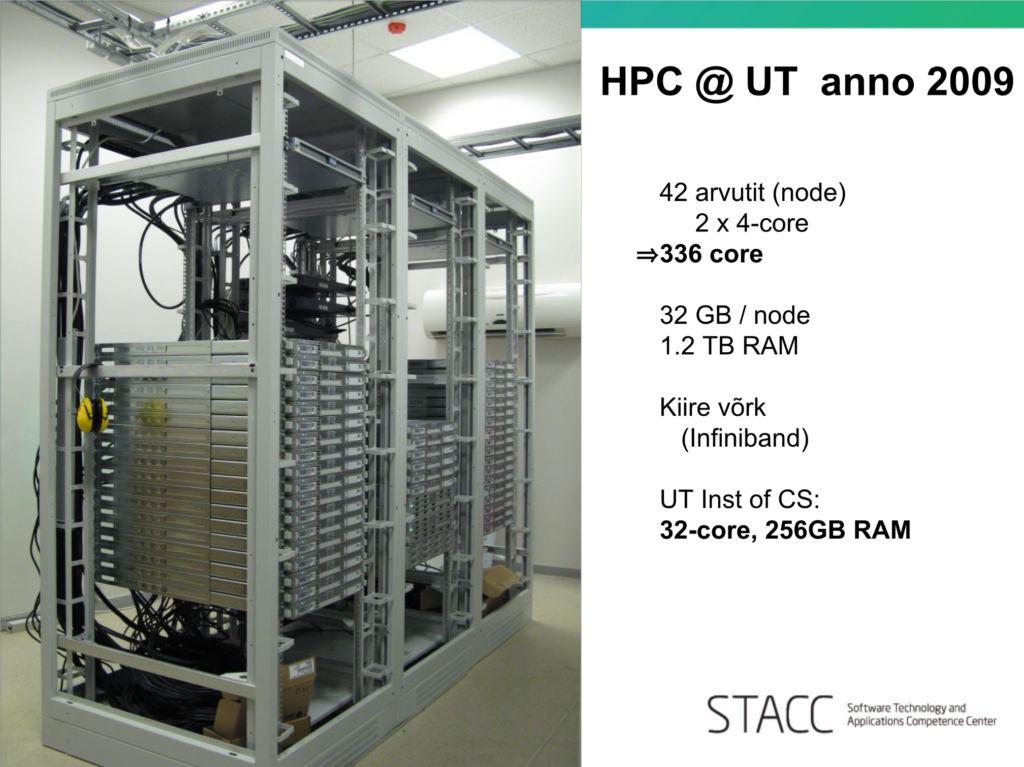
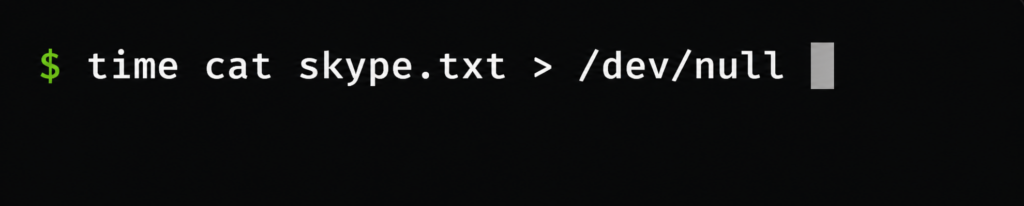
I remember the first time we received the structure of Skype’s social network, with the users pseudonymised (meaning there were no usernames or anything like that). Just reading the text file from the computer’s hard drive took more than 20 minutes. I received the data on a hard drive and drove it to Tartu myself. Transferring it over the network would have taken days, if not weeks.
How easy or difficult was it to explain the idea behind STACC to other people at the time?
Oh, that’s a difficult one.
Even today, IT often isn’t seen as ‘scientific enough’. There’s an assumption that all you need is a large enough number of programmers.
Another issue is the difference between what companies need and what’s happening at the cutting edge of research worldwide. Estonian companies might not yet have had solutions of their own, such as recommendation engines, while similar technologies were already being tested elsewhere in the world. Of course, we weren’t the first to work on them. And that makes it easy for someone to ask: why are you doing this at all?
But applied research always involves testing many different solutions before you find out what actually works in your particular setting.
It’s easy for a minister or politician to demand to know where the results are, or why you’re not doing something completely different instead, but the real work is often slower, more technical and a lot less glamorous.
What was the hardest part of those early years?
Getting companies involved in research was certainly a major undertaking in itself. As I said, Marlon played a very important role there.
In the early days, it was also practically impossible to find people with research degrees.
At the University of Tartu, just one person completed a PhD in IT between 1990 and 1999, and another nine between 2000 and 2009. Those ten locally trained PhDs obviously couldn’t work miracles.
To teach 800 students at the university alone, we would have needed around 80 people with PhDs.
So we had to put our efforts into attracting younger people and students, while somehow finding the extra hours ourselves. I think we regularly worked around 60 hours a week in those days. That’s the part nobody else sees.
Looking back, did anything turn out to be easier or go better than you expected?
I’m not sure I can give a very good answer to that.
In hindsight, it all seems to have gone fairly smoothly. But when you were in the middle of it, there was one problem after another – or we were trying to achieve more than we were capable of at the time.
We were starting from scratch, doing something that hadn’t been done here before. Companies didn’t always have clearly defined needs. We didn’t have the people, and there hadn’t been funding for this kind of work before.
Then we could start finding people and getting them to work on things that simply wouldn’t have been possible previously. And as a rule, the companies contributed by involving their own people.
What fundamental decisions shaped the kind of organisation STACC would become?
One of the central questions was how to balance scientific quality with the practical needs of companies.
The interim evaluations were difficult because the performance indicators tended to favour top-tier academic publications, while companies needed practical solutions. Those two objectives don’t always fit comfortably together. It’s also very difficult to measure STACC’s direct impact on a company’s revenue growth.
In that sense, it’s quite a narrow space to operate in: on the one hand, the work needs to be scientifically strong; on the other, it has to deliver real benefits to companies. I think, overall, we’ve managed that dilemma pretty well.
Without public funding, we probably wouldn’t have been able to involve companies in the same way. Other funding schemes have emerged since then, some of which may even seem more attractive to businesses in the short term, but that initial funding was crucial for STACC.
Another sticking point was how people saw STACC’s employees: were they essentially an extended pool of staff for the partner companies, or was STACC building its own independent development team? Creating a team that worked closely with companies but still had enough independence was certainly difficult. Most of the other competence centres folded as soon as their funding from Enterprise Estonia (EAS) ended.
What kind of people did STACC need from the start?
The same kind of people any development team needs. They have to be scientifically capable and knowledgeable, able to read and understand theory, but at the same time very practical and able to put that knowledge to work.
When you’re doing applied research, you don’t yet know whether it will produce a commercial result. And a topic that originates with one company might turn out to be useful to a completely different company.
There have been cases where the technology works, you can see the benefits and applications, and you’ve even got it up and running – but then the people responsible in the company feel that their jobs are threatened, or a different business decision is made. I won’t name any examples here, but there have been a couple of cases like that.
How similar is STACC today to the organisation you originally envisaged?
STACC is definitely different today.
In the beginning, it was essentially centred around an Enterprise Estonia-funded project. Today, STACC is an independent company focused on providing services and developing proposals for clients, while retaining a small core of research and development activity.
That research core has also given STACC a great deal of credibility and helped support and cross-fertilise its more commercially focused projects.
What impact has STACC had that might be less visible from the outside?
I reckon around 400 people have passed through STACC and been on its payroll over the years. I don’t actually know the precise figure now. At one point, our project reports to Enterprise Estonia included more than 250 people who had been involved at various times.
STACC’s projects have certainly brought recognition and commercial success to many companies. There are examples such as ZeroTurnaround and Reach-U (a spin-out from Regio), also new companies such as TEXTA, which grew out of technology developed at STACC. And then there are all the people who have moved from STACC into other private-sector companies.
Cybernetica’s product development efforts, including Sharemind, also received a major boost from STACC.
What turned out differently from what you originally imagined?
Estonia’s hospitals and the wider public-sector health data landscape weren’t particularly quick to come on board.
But we acquired skills and developed capabilities that have since proved very successful. Admittedly, much of that work has now shifted towards the University of Tartu’s Health Informatics research group.
Because the funding was aimed at the development needs of existing companies, we couldn’t really expect it to support independent development work or the creation of new companies. And yet a few did emerge. TEXTA is one example.
Where do you think STACC fits into Estonia’s AI and data science landscape today?
The reason STACC and the university can quite happily ‘share the market’ is that companies are often looking for a service provider.
The university’s role is more about developing ideas, experimenting and involving students who may have no experience at all – and helping them develop through that process. A university can afford to let many ideas go nowhere because a particular person isn’t able to take them further or doesn’t put in enough effort. A business like STACC can’t afford that. Otherwise, it would go bankrupt.
In a sense, it would be wrong to judge universities and businesses by exactly the same measures, because a university doesn’t have the same relationship with its students and doctoral researchers that a company has with its employees.
The university’s main focus should still be coming up with new ideas and technologies, testing and developing them – and, in the process, educating and training large numbers of people so that they can eventually work independently in business development and R&D.
It would be great if companies saw universities more as places where they could develop and test ‘wild ideas’, rather than somewhere they could go to get another feature added to their product by tomorrow.
That creates a natural spectrum. Some problems are suitable for STACC, while others call for going further into research, where the possible solutions aren’t yet clear. Of course, for a company, that also means you can’t necessarily say in advance exactly what the work will involve or how many hours it will take.
What role could STACC play alongside the University of Tartu’s Institute of Computer Science?
STACC could now become a significant employer of people with PhDs. It should also find ways for STACC and the university to complement and strengthen each other.
An important part of that would be offering internships and career opportunities in research, development and innovation carried out in collaboration with companies.
I’m talking about work that’s too applied and development-focused for the university, but which still requires the fundamental scientific knowledge that research provides.
How could STACC help Estonian companies become more competitive in the age of AI?
One of the new areas right now is probably the adoption of agentic AI. It’s only emerged very recently, but everyone needs to be ready to work with it.
I think STACC could have the greatest impact in areas where adopting IT has so far been too expensive or too complicated. Advances in AI could help bring the costs down while increasing the benefits.
That applies to many sectors. Industry and energy, certainly. The public sector should also be doing a lot more innovation itself, rather than just waiting for ready-made solutions.
Language technology has essentially been ‘taken over’ by today’s AI. But even there, putting the technology into practice isn’t always straightforward. These are precisely the situations where you need to understand what a new technology can actually do and how to make it work within a particular organisation.
Should STACC focus more on applying advanced research, becoming a strategic AI partner for companies, developing new products, or training talent?
I think STACC needs to build some form of strategic partnership and find its own niche.
Consultancy can be useful to many other companies, but it isn’t a particularly scalable business model. So having a product of its own that could generate good profits would certainly be a valuable addition for STACC.
Looking further ahead, I also think it’s important that STACC continues to develop its role beyond the end of the projects funded by the Estonian Business and Innovation Agency (EIS).
If you could go back to the moment when the idea for STACC first emerged, what would you say with the benefit of hindsight?
Well, you can’t run before you can walk.
Getting people involved was difficult back then – one of the main things setting up STACC enabled us to do was start recruiting students and our first doctoral researchers. There should be more people available to recruit today, simply because the university has done such a good job of educating them over the years. Back then, it didn’t feel like that at all.
We really were starting from a very low base.
What can STACC’s founding story teach us about the technology decisions we face today?
That you need to recognise a strategic need and have a vision of which fields are going to become important.
Once it’s clear that a field is going to matter, you have to actually invest in it. I think the money invested by European and Estonian taxpayers has more than paid for itself in Estonia through the companies that STACC has genuinely helped. ZeroTurnaround alone, incidentally, has justified that investment. But the benefits go much, much further.
And if you know you’re needed in that role, you just have to get on with it.